


Normandy - dog friendly holiday homes
Dog Friendly Normandy Holiday Homes – How to Choose the Right Stay for You and Your Dog
Normandy offers very different conditions for dog owners compared to Brittany. Distances are shorter, landscapes are more structured, and regulations—especially along popular beaches—can be stricter. Choosing the right dog friendly Normandy holiday home, cottage, or apartment requires a more precise evaluation of location, access and property setup.
Normandy - Find fenced holiday homes dog friendly
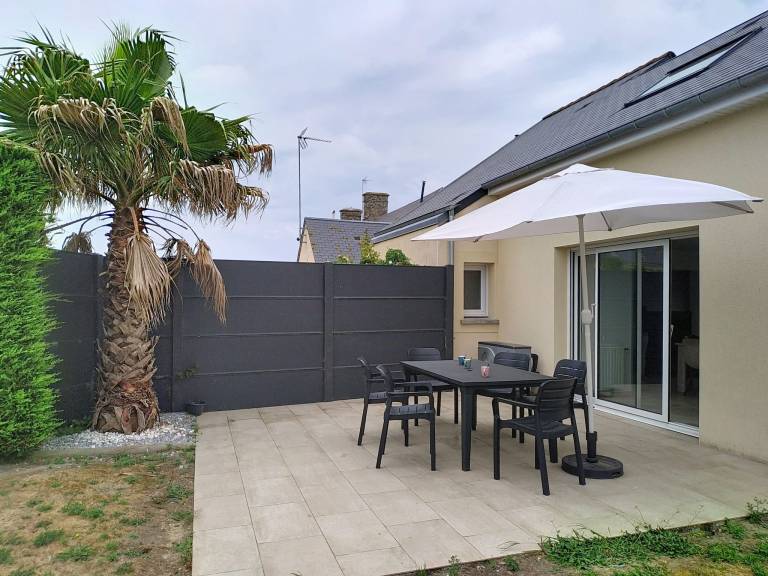
Holiday home dog friendly in Créances
Normandy, France
75 m² House - dog friendly -
for max. 5 persons
Le jardin du calme
, 2 bedrooms
🐶 Dog friendly!
Price per week: from 168 EUR
To the offer
A partner offer from HomeToGo
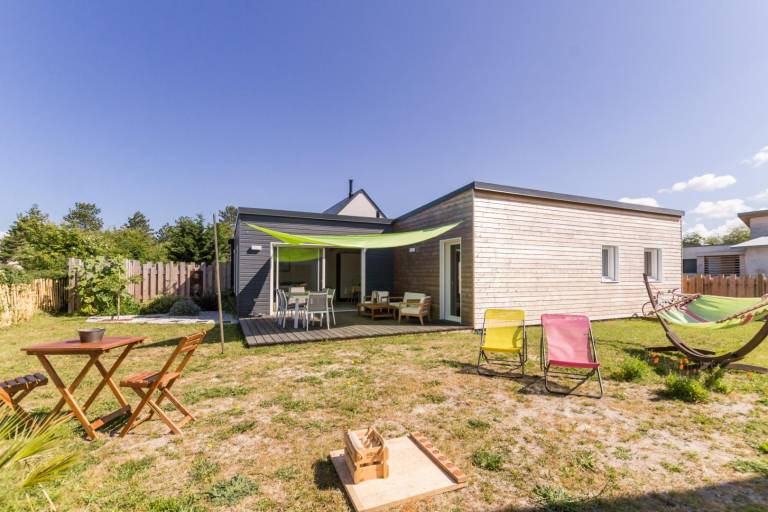
Holiday home dog friendly in Lingreville
Normandy, France
76 m² House - dog friendly -
for max. 4 persons
Les Ganivelles
, 2 bedrooms
🐶 Dog friendly!
Price per week: from 553 EUR
To the offer
A partner offer from HomeToGo
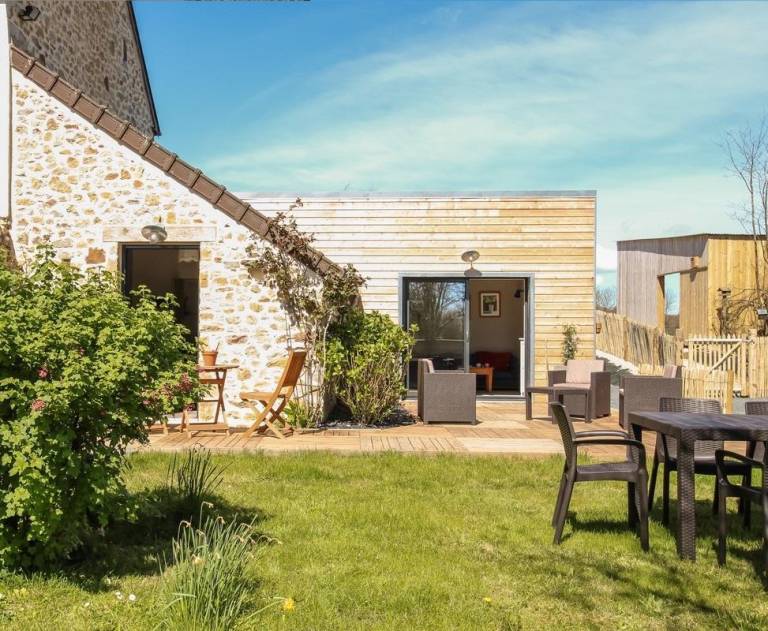
Holiday home dog friendly in Bricquebec
Normandy, France
80 m² House - dog friendly -
for max. 4 persons
Côtes et Campagne
, 2 bedrooms
🐶 Dog friendly!
Price per week: from 483 EUR
To the offer
A partner offer from HomeToGo
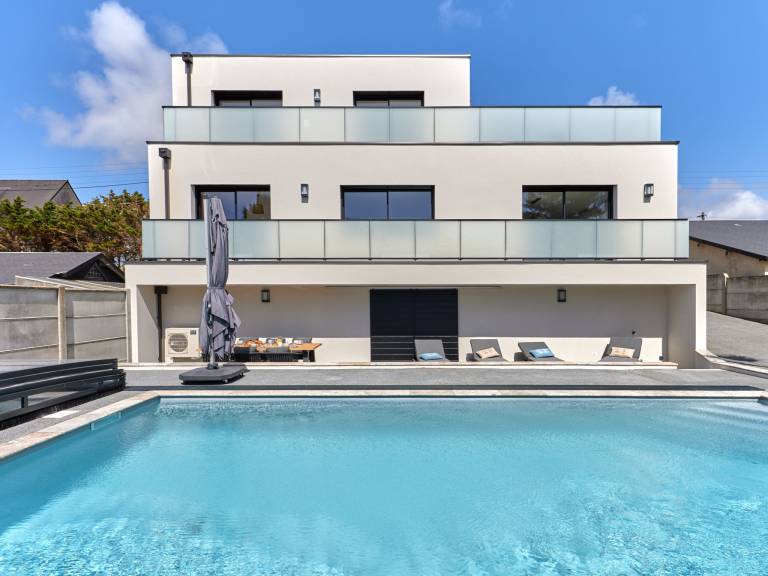
Holiday home dog friendly and Pool in Denneville
Normandy, France
135 m² House - dog friendly -
for max. 6 persons
Denneweiller
, 3 bedrooms
🏊 Pool
🐶 Dog friendly!
Price per week: from 1.428 EUR
To the offer
A partner offer from HomeToGo
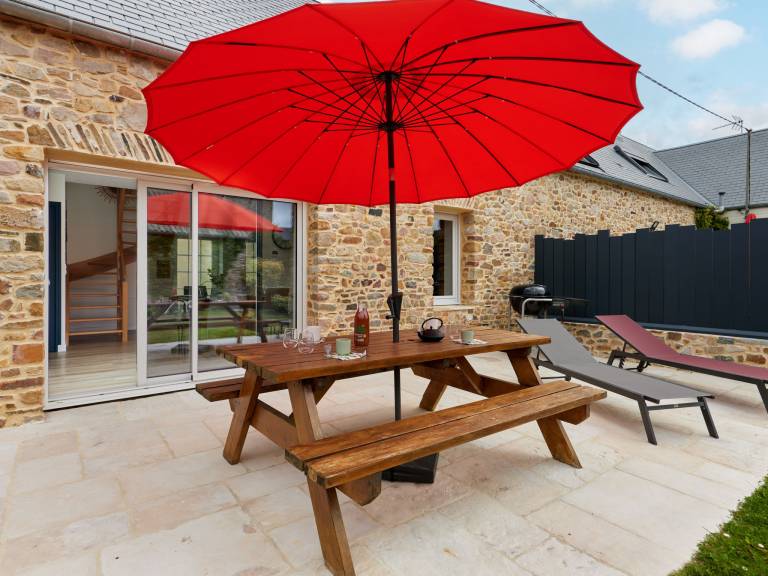
Holiday home dog friendly in Créances
Normandy, France
90 m² House - dog friendly -
for max. 4 persons
La Bergerie
, 1 bedrooms
🐶 Dog friendly!
Price per week: from 448 EUR
To the offer
A partner offer from HomeToGo
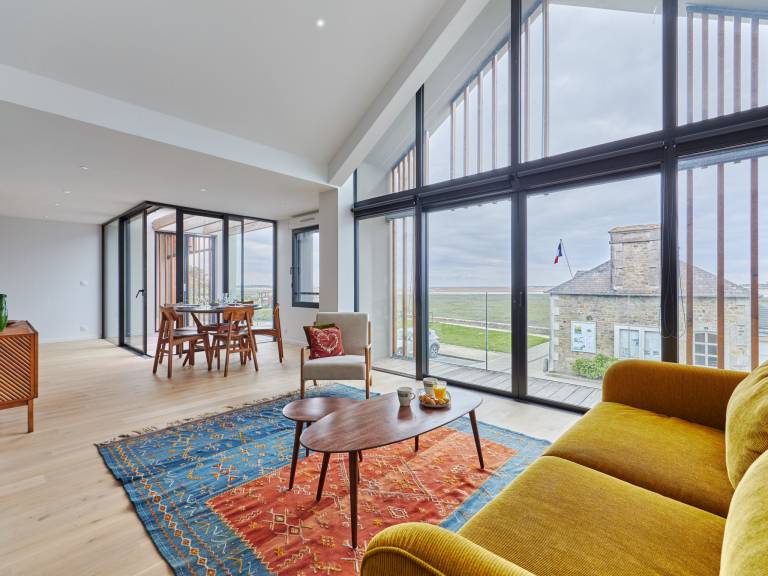
Holiday home dog friendly in Regnéville-sur-Mer
Normandy, France
110 m² House - dog friendly -
for max. 5 persons
Le Sund
, 3 bedrooms
🐶 Dog friendly!
Price per week: from 833 EUR
To the offer
A partner offer from HomeToGo

Holiday home dog friendly in Quinéville
Normandy, France
86 m² House - dog friendly -
for max. 6 persons
Les pieds dans l'eau
, 1 bedrooms
🐶 Dog friendly!
Price per week: from 868 EUR
To the offer
A partner offer from HomeToGo
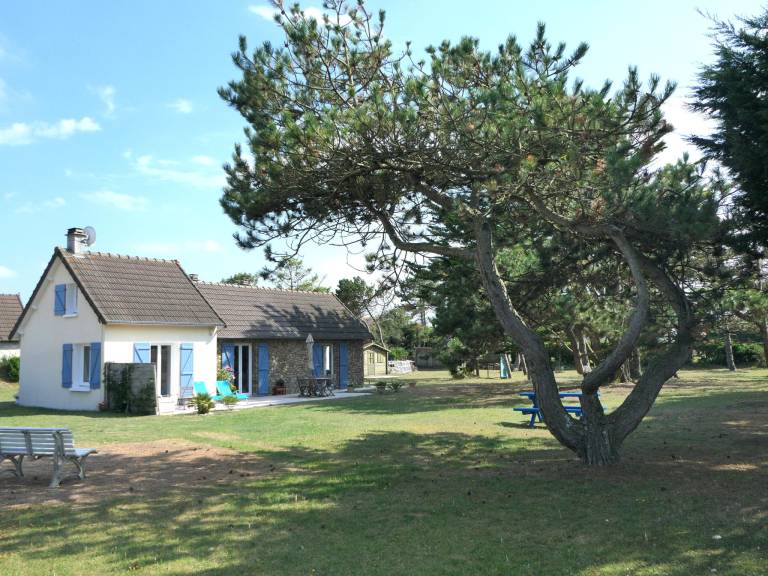
Holiday home dog friendly in Anneville-sur-Mer
Normandy, France
85 m² House - dog friendly -
for max. 4 persons
"8883" in Strandnähe
, 2 bedrooms
🐶 Dog friendly!
Price per week: from 875 EUR
To the offer
A partner offer from HomeToGo
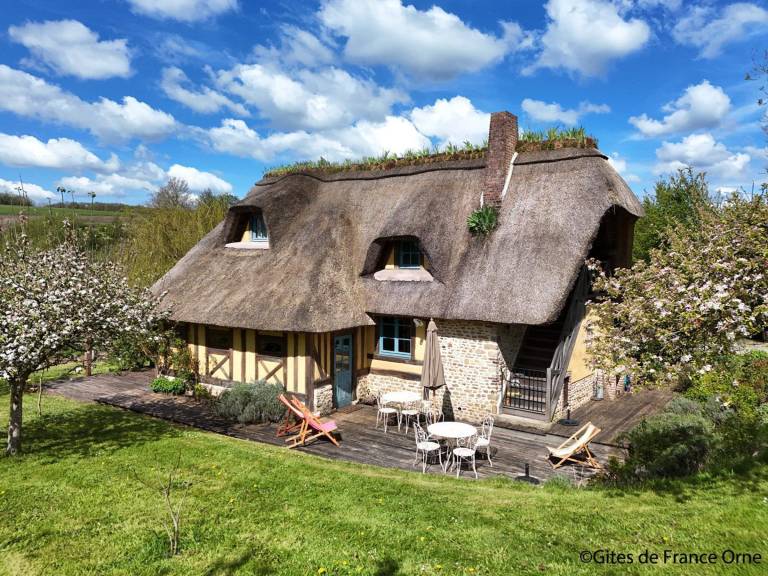
dog friendly in Saint-Evroult-de-Montfort
Normandy, France
119 m² Cottage - dog friendly -
for max. 4 persons
Typical cottage with fireplace and garden, pets allowed
, 2 bedrooms
🐶 Dog friendly!
Price per week: from 763 EUR
To the offer
A partner offer from HomeToGo
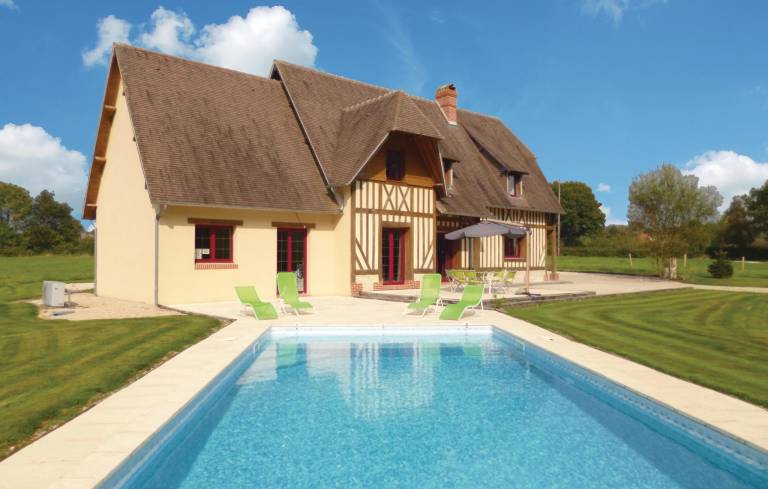
Holiday home dog friendly and Pool in La Croupte
Normandy, France
170 m² House - dog friendly -
for max. 8 persons
, 4 bedrooms
🏊 Pool
🐶 Dog friendly!
Price per week: from 931 EUR
To the offer
A partner offer from HomeToGo
This guide focuses on practical decision-making, not generic recommendations.
Dog Friendly France Holiday Homes
Dog Friendly Normandy Holiday Homes: What You Actually Get
“Dog friendly” in Normandy often means dogs are allowed, not that the property is adapted.
Verify these essentials before booking:
- Number and size of dogs allowed
- Extra fees or deposits
- Access to outdoor space
- Restrictions inside the property
- Proximity to usable walking areas
👉 In Normandy, usability is more important than permission. A property can allow dogs but still be impractical due to surroundings.
Dog Friendly Normandy Holiday Homes by Area: Real Differences That Matter
Normandy is divided into distinct zones, each with different implications for dog owners.
Cotentin Peninsula (West Normandy) – Best for space and flexibility
- long, open beaches
- lower population density
- more relaxed environment
Best for: off-leash walks, active dogs, fewer restrictions
Calvados Coast (Deauville, Trouville) – Highly regulated
- well-known seaside resorts
- strict seasonal dog restrictions
- dense tourism infrastructure
Best for: short stays, off-season travel, controlled dogs
Seine-Maritime (Étretat, Fécamp) – scenic but limited usability
- cliffs and pebble beaches
- limited flat walking areas
- access often via steep paths
Best for: experienced dog owners comfortable with terrain constraints
Inland Normandy – most underestimated option
- farmland, forests, quiet roads
- fewer restrictions than coastal zones
- often larger properties
Best for: calm environments, dogs needing space without beach dependency
Dog Friendly Holiday Homes vs Apartments in Normandy
The type of accommodation strongly impacts daily routine.
Holiday homes (houses)
- direct outdoor access
- fewer rules and shared spaces
- easier logistics with dogs
👉 Preferred option in Normandy
Apartments
- common in coastal towns
- limited space and no garden
- potential issues with stairs, elevators, neighbours
👉 Only practical for:
- small dogs
- short stays
- urban environments
Rural cottages (gîtes)
- often located inland
- larger plots, sometimes partially fenced
- fewer immediate restrictions
👉 Good alternative if beach access is not the priority
Dog Friendly Normandy Holiday Homes with Garden: What to Check
Outdoor space is critical—but not always as described.
Typical issues:
- open rural land without fencing
- partial fencing with gaps
- hedges instead of secure barriers
Key criteria:
- fully enclosed perimeter
- sufficient fence height
- no direct road access
👉 Normandy properties often have large plots—but not necessarily secure ones.
Dog Friendly Beaches in Normandy: Rules That Affect Your Stay
Beach access is more regulated than many expect.
Important facts:
- many beaches restrict dogs during summer months
- rules vary locally, not regionally
- pebble beaches dominate in some areas
Practical implications:
- not all “beachfront” properties are usable with dogs
- access paths may include stairs or cliffs
- flat, sandy, dog-friendly beaches are location-specific
👉 Always verify the exact beach policy of the municipality.
When to Book Dog Friendly Normandy Holiday Homes
Off-season (recommended)
- fewer restrictions on beaches
- more available properties
- easier logistics with dogs
👉 Best months: May, June, September
Peak season
- strict enforcement of beach rules
- higher density of tourists
- increased pressure on public spaces
👉 Suitable only if:
- your dog is highly adaptable
- you rely on private outdoor space
Frequently Asked Questions about Dog Friendly Normandy Holiday Homes
Are dogs allowed on Normandy beaches?
Access depends on local municipal regulations, not on the region as a whole. There is no unified rule across Normandy.
Key factors:
- Seasonality: Many beaches prohibit dogs during peak season (typically July–August)
- Time restrictions: Some allow dogs early morning or late evening
-
Beach type:
- sandy beaches → more restrictions
- pebble beaches → sometimes more tolerant
Practical implication:
A holiday home “by the sea” is only valuable if:
- the nearest beach allows dogs during your travel period
- access is physically possible (no cliffs, stairs, or long detours)
👉 Always verify the exact municipality + beach name, not just “Normandy coast”.
Is Normandy suitable for large or active dogs?
Yes—but only in specific areas.
Best suited regions:
- Cotentin Peninsula: wide, open landscapes, long walking distances
- inland Normandy: farmland, forest tracks, low traffic
Limitations to consider:
- cliff regions (e.g. Étretat) restrict free movement
- urban coastal areas reduce off-leash opportunities
- summer crowds limit space and flexibility
👉 Large or high-energy dogs need:
- daily long-distance walking options
- low-density environments
- minimal leash restrictions
These conditions are not evenly distributed across Normandy.
Are apartments a good choice in Normandy?
Only under specific conditions.
Apartments work if:
- your dog is small or low-energy
- your stay is short
- you are located near accessible walking routes
Apartments become problematic when:
- no direct outdoor access
- multiple floors, stairs, or elevators
- shared entrances with other guests
- limited space for movement
Key constraint:
Normandy towns are often compact, meaning:
- less green space nearby
- more traffic and pedestrian density
👉 For most dog owners, apartments reduce flexibility compared to houses or cottages.
Do I need a fenced garden?
This depends on dog behavior and property location, not preference.
A fenced garden is strongly recommended if:
- your dog has unreliable recall
- there is wildlife nearby (common in rural Normandy)
- the property is near roads or farmland
- you plan longer stays with unsupervised outdoor time
Less critical if:
- your dog is highly trained
- you rely mainly on walks, not garden use
- the property is isolated and low-risk
Important distinction:
- “garden” ≠ “secure garden”
- many rural properties are open or only partially enclosed
👉 A non-fenced large property can be less practical than a smaller, secure one.
Is inland Normandy a better option than the coast?
In many cases, yes—especially for dog owners prioritizing usability over scenery.
Advantages of inland locations:
- fewer restrictions on movement
- more consistent access to walking routes
- larger properties at lower cost
- less seasonal pressure
Trade-offs:
- no direct beach access
- less tourist infrastructure
- more reliance on driving
When inland is the better choice:
- you travel in peak season
- your dog needs space and routine
- beach access is not your primary goal
👉 Coastal locations are attractive visually, but inland properties often perform better functionally.
How important is proximity to walking routes?
Critical. More important than sea view or central location.
Key considerations:
- direct access vs. needing to drive
- type of terrain (flat paths vs. cliffs or roads)
- traffic levels
👉 A property with immediate access to:
- coastal paths
- forest tracks
- low-traffic rural roads
is significantly more practical than one in a tourist center.
What are the biggest booking mistakes in Normandy with a dog?
-
Choosing based on popularity (Étretat, Deauville)
→ high restrictions, limited usable space -
Assuming all coastal areas are dog-friendly
→ many beaches have strict rules -
Ignoring terrain
→ cliffs and steep paths reduce usability -
Overestimating apartment suitability
→ lack of outdoor space becomes a daily issue -
Not verifying garden security
→ open land is common in rural listings
👉 Most problems come from mismatch between listing description and real-world use with a dog.
How does travel season affect usability in Normandy?
Season has a direct impact on daily flexibility.
Off-season (recommended):
- fewer beach restrictions
- lower density
- easier movement
Peak season:
- strict enforcement of rules
- limited beach access
- crowded public spaces
👉 The same property can be:
- highly practical in May
- restrictive in August
How do I evaluate a property beyond the listing description?
Focus on functional criteria, not marketing terms.
Check:
- exact location (map, satellite view)
- distance to usable walking areas
- fencing details (if any)
- road proximity
- terrain type
Ignore:
- generic labels like “pet-friendly”
- decorative features
- vague distance descriptions (“close to”)
👉 Decision quality depends on how well you interpret the surroundings—not the listing text.
Find more pet friendly holiday homes in france
Normandy: Holiday Home - dog allowedThis guide focuses on practical decision-making, not generic recommendations.
Dog Friendly France Holiday Homes
Dog Friendly Normandy Holiday Homes: What You Actually Get
“Dog friendly” in Normandy often means dogs are allowed, not that the property is adapted.
Verify these essentials before booking:
- Number and size of dogs allowed
- Extra fees or deposits
- Access to outdoor space
- Restrictions inside the property
- Proximity to usable walking areas
👉 In Normandy, usability is more important than permission. A property can allow dogs but still be impractical due to surroundings.
Dog Friendly Normandy Holiday Homes by Area: Real Differences That Matter
Normandy is divided into distinct zones, each with different implications for dog owners.
Cotentin Peninsula (West Normandy) – Best for space and flexibility
- long, open beaches
- lower population density
- more relaxed environment
Best for: off-leash walks, active dogs, fewer restrictions
Calvados Coast (Deauville, Trouville) – Highly regulated
- well-known seaside resorts
- strict seasonal dog restrictions
- dense tourism infrastructure
Best for: short stays, off-season travel, controlled dogs
Seine-Maritime (Étretat, Fécamp) – scenic but limited usability
- cliffs and pebble beaches
- limited flat walking areas
- access often via steep paths
Best for: experienced dog owners comfortable with terrain constraints
Inland Normandy – most underestimated option
- farmland, forests, quiet roads
- fewer restrictions than coastal zones
- often larger properties
Best for: calm environments, dogs needing space without beach dependency
Dog Friendly Holiday Homes vs Apartments in Normandy
The type of accommodation strongly impacts daily routine.
Holiday homes (houses)
- direct outdoor access
- fewer rules and shared spaces
- easier logistics with dogs
👉 Preferred option in Normandy
Apartments
- common in coastal towns
- limited space and no garden
- potential issues with stairs, elevators, neighbours
👉 Only practical for:
- small dogs
- short stays
- urban environments
Rural cottages (gîtes)
- often located inland
- larger plots, sometimes partially fenced
- fewer immediate restrictions
👉 Good alternative if beach access is not the priority
Dog Friendly Normandy Holiday Homes with Garden: What to Check
Outdoor space is critical—but not always as described.
Typical issues:
- open rural land without fencing
- partial fencing with gaps
- hedges instead of secure barriers
Key criteria:
- fully enclosed perimeter
- sufficient fence height
- no direct road access
👉 Normandy properties often have large plots—but not necessarily secure ones.
Dog Friendly Beaches in Normandy: Rules That Affect Your Stay
Beach access is more regulated than many expect.
Important facts:
- many beaches restrict dogs during summer months
- rules vary locally, not regionally
- pebble beaches dominate in some areas
Practical implications:
- not all “beachfront” properties are usable with dogs
- access paths may include stairs or cliffs
- flat, sandy, dog-friendly beaches are location-specific
👉 Always verify the exact beach policy of the municipality.
When to Book Dog Friendly Normandy Holiday Homes
Off-season (recommended)
- fewer restrictions on beaches
- more available properties
- easier logistics with dogs
👉 Best months: May, June, September
Peak season
- strict enforcement of beach rules
- higher density of tourists
- increased pressure on public spaces
👉 Suitable only if:
- your dog is highly adaptable
- you rely on private outdoor space
Frequently Asked Questions about Dog Friendly Normandy Holiday Homes
Are dogs allowed on Normandy beaches?
Access depends on local municipal regulations, not on the region as a whole. There is no unified rule across Normandy.
Key factors:
- Seasonality: Many beaches prohibit dogs during peak season (typically July–August)
- Time restrictions: Some allow dogs early morning or late evening
-
Beach type:
- sandy beaches → more restrictions
- pebble beaches → sometimes more tolerant
Practical implication:
A holiday home “by the sea” is only valuable if:
- the nearest beach allows dogs during your travel period
- access is physically possible (no cliffs, stairs, or long detours)
👉 Always verify the exact municipality + beach name, not just “Normandy coast”.
Is Normandy suitable for large or active dogs?
Yes—but only in specific areas.
Best suited regions:
- Cotentin Peninsula: wide, open landscapes, long walking distances
- inland Normandy: farmland, forest tracks, low traffic
Limitations to consider:
- cliff regions (e.g. Étretat) restrict free movement
- urban coastal areas reduce off-leash opportunities
- summer crowds limit space and flexibility
👉 Large or high-energy dogs need:
- daily long-distance walking options
- low-density environments
- minimal leash restrictions
These conditions are not evenly distributed across Normandy.
Are apartments a good choice in Normandy?
Only under specific conditions.
Apartments work if:
- your dog is small or low-energy
- your stay is short
- you are located near accessible walking routes
Apartments become problematic when:
- no direct outdoor access
- multiple floors, stairs, or elevators
- shared entrances with other guests
- limited space for movement
Key constraint:
Normandy towns are often compact, meaning:
- less green space nearby
- more traffic and pedestrian density
👉 For most dog owners, apartments reduce flexibility compared to houses or cottages.
Do I need a fenced garden?
This depends on dog behavior and property location, not preference.
A fenced garden is strongly recommended if:
- your dog has unreliable recall
- there is wildlife nearby (common in rural Normandy)
- the property is near roads or farmland
- you plan longer stays with unsupervised outdoor time
Less critical if:
- your dog is highly trained
- you rely mainly on walks, not garden use
- the property is isolated and low-risk
Important distinction:
- “garden” ≠ “secure garden”
- many rural properties are open or only partially enclosed
👉 A non-fenced large property can be less practical than a smaller, secure one.
Is inland Normandy a better option than the coast?
In many cases, yes—especially for dog owners prioritizing usability over scenery.
Advantages of inland locations:
- fewer restrictions on movement
- more consistent access to walking routes
- larger properties at lower cost
- less seasonal pressure
Trade-offs:
- no direct beach access
- less tourist infrastructure
- more reliance on driving
When inland is the better choice:
- you travel in peak season
- your dog needs space and routine
- beach access is not your primary goal
👉 Coastal locations are attractive visually, but inland properties often perform better functionally.
How important is proximity to walking routes?
Critical. More important than sea view or central location.
Key considerations:
- direct access vs. needing to drive
- type of terrain (flat paths vs. cliffs or roads)
- traffic levels
👉 A property with immediate access to:
- coastal paths
- forest tracks
- low-traffic rural roads
is significantly more practical than one in a tourist center.
What are the biggest booking mistakes in Normandy with a dog?
-
Choosing based on popularity (Étretat, Deauville)
→ high restrictions, limited usable space -
Assuming all coastal areas are dog-friendly
→ many beaches have strict rules -
Ignoring terrain
→ cliffs and steep paths reduce usability -
Overestimating apartment suitability
→ lack of outdoor space becomes a daily issue -
Not verifying garden security
→ open land is common in rural listings
👉 Most problems come from mismatch between listing description and real-world use with a dog.
How does travel season affect usability in Normandy?
Season has a direct impact on daily flexibility.
Off-season (recommended):
- fewer beach restrictions
- lower density
- easier movement
Peak season:
- strict enforcement of rules
- limited beach access
- crowded public spaces
👉 The same property can be:
- highly practical in May
- restrictive in August
How do I evaluate a property beyond the listing description?
Focus on functional criteria, not marketing terms.
Check:
- exact location (map, satellite view)
- distance to usable walking areas
- fencing details (if any)
- road proximity
- terrain type
Ignore:
- generic labels like “pet-friendly”
- decorative features
- vague distance descriptions (“close to”)
👉 Decision quality depends on how well you interpret the surroundings—not the listing text.
Find more pet friendly holiday homes in france